


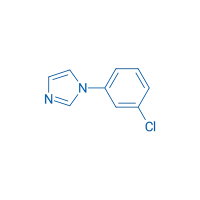


The reaction rates of reactions involving fluorinated building blocks are a fascinating area of study in organic chemistry. As a supplier of fluorinated building blocks, I've witnessed firsthand the growing interest in these compounds and their unique reactivity. In this blog post, we'll explore the factors that influence the reaction rates of reactions involving fluorinated building blocks and discuss some of the key considerations for chemists working with these materials.
Understanding Fluorinated Building Blocks
Fluorinated building blocks are organic compounds that contain one or more fluorine atoms. These compounds are highly sought after in the pharmaceutical, agrochemical, and materials science industries due to their unique properties, such as increased lipophilicity, metabolic stability, and bioactivity. Fluorinated building blocks can be used to synthesize a wide range of complex molecules, including drugs, pesticides, and polymers.
Factors Affecting Reaction Rates
The reaction rates of reactions involving fluorinated building blocks are influenced by several factors, including the nature of the fluorinated group, the reaction conditions, and the presence of catalysts. Let's take a closer look at each of these factors:
Nature of the Fluorinated Group
The presence of fluorine atoms in a molecule can significantly affect its reactivity. Fluorine is the most electronegative element, which means that it has a strong tendency to attract electrons. This can lead to a variety of effects, such as increased acidity, decreased basicity, and altered steric properties. For example, fluorinated alcohols are more acidic than their non-fluorinated counterparts due to the electron-withdrawing effect of the fluorine atoms. This increased acidity can make fluorinated alcohols more reactive in certain reactions, such as esterification and etherification.
Reaction Conditions
The reaction conditions, such as temperature, pressure, and solvent, can also have a significant impact on the reaction rates of reactions involving fluorinated building blocks. For example, increasing the temperature generally increases the reaction rate, as it provides more energy for the reactant molecules to overcome the activation energy barrier. However, some reactions may be sensitive to high temperatures, and may require milder reaction conditions to avoid side reactions or decomposition. The choice of solvent can also affect the reaction rate, as different solvents have different polarities and solvation properties. For example, polar solvents can stabilize charged intermediates, which can increase the reaction rate.
Catalysts
Catalysts are substances that can increase the reaction rate without being consumed in the reaction. In reactions involving fluorinated building blocks, catalysts can be used to lower the activation energy barrier and increase the reaction rate. There are several types of catalysts that can be used in these reactions, including acid catalysts, base catalysts, and transition metal catalysts. For example, acid catalysts can be used to promote the reaction of fluorinated alcohols with carboxylic acids to form esters. Base catalysts can be used to promote the reaction of fluorinated alkyl halides with nucleophiles to form substituted products. Transition metal catalysts can be used to promote a variety of reactions, such as cross-coupling reactions and hydrogenation reactions.
Examples of Reactions Involving Fluorinated Building Blocks
Let's take a look at some examples of reactions involving fluorinated building blocks and discuss their reaction rates:
Esterification of Fluorinated Alcohols
The esterification of fluorinated alcohols with carboxylic acids is a common reaction in organic chemistry. This reaction can be catalyzed by acid catalysts, such as sulfuric acid or p-toluenesulfonic acid. The reaction rate of this reaction is influenced by several factors, including the nature of the fluorinated alcohol, the carboxylic acid, and the reaction conditions. For example, fluorinated alcohols with electron-withdrawing groups, such as trifluoromethyl groups, are more reactive than non-fluorinated alcohols due to the increased acidity of the alcohol. The reaction rate can also be increased by increasing the temperature and using a polar solvent.
Nucleophilic Substitution Reactions of Fluorinated Alkyl Halides
The nucleophilic substitution reactions of fluorinated alkyl halides with nucleophiles, such as amines or alcohols, are another important class of reactions involving fluorinated building blocks. These reactions can be catalyzed by base catalysts, such as sodium hydroxide or potassium carbonate. The reaction rate of this reaction is influenced by several factors, including the nature of the fluorinated alkyl halide, the nucleophile, and the reaction conditions. For example, fluorinated alkyl halides with electron-withdrawing groups, such as trifluoromethyl groups, are more reactive than non-fluorinated alkyl halides due to the increased acidity of the alkyl halide. The reaction rate can also be increased by increasing the temperature and using a polar solvent.
Cross-Coupling Reactions of Fluorinated Aryl Halides
The cross-coupling reactions of fluorinated aryl halides with organometallic reagents, such as Grignard reagents or organolithium reagents, are a powerful method for the synthesis of fluorinated biaryls and other complex molecules. These reactions can be catalyzed by transition metal catalysts, such as palladium or nickel. The reaction rate of this reaction is influenced by several factors, including the nature of the fluorinated aryl halide, the organometallic reagent, and the reaction conditions. For example, fluorinated aryl halides with electron-withdrawing groups, such as trifluoromethyl groups, are more reactive than non-fluorinated aryl halides due to the increased acidity of the aryl halide. The reaction rate can also be increased by increasing the temperature and using a polar solvent.
Key Considerations for Chemists
When working with fluorinated building blocks, there are several key considerations that chemists should keep in mind:
Safety
Fluorinated compounds can be toxic and hazardous, and should be handled with care. Chemists should wear appropriate personal protective equipment, such as gloves, goggles, and lab coats, when working with these compounds. They should also follow proper safety procedures, such as working in a well-ventilated area and disposing of waste properly.


Reactivity
Fluorinated building blocks can be highly reactive, and may require special reaction conditions or catalysts to achieve the desired reaction. Chemists should carefully consider the reactivity of the fluorinated building block and choose the appropriate reaction conditions and catalysts to ensure a successful reaction.
Purity
The purity of the fluorinated building block can have a significant impact on the reaction rate and the outcome of the reaction. Chemists should ensure that the fluorinated building block is of high purity and free from impurities that could interfere with the reaction.
Cost
Fluorinated building blocks can be expensive, and chemists should carefully consider the cost of the building block when designing a synthesis. They should also explore alternative building blocks or synthetic routes that may be more cost-effective.
Conclusion
The reaction rates of reactions involving fluorinated building blocks are influenced by several factors, including the nature of the fluorinated group, the reaction conditions, and the presence of catalysts. Chemists working with these materials should carefully consider these factors and choose the appropriate reaction conditions and catalysts to ensure a successful reaction. As a supplier of fluorinated building blocks, we offer a wide range of high-quality products, including 4-Methoxy-2-(trimethylsilyl)phenyl Trifluoromethanesulfonate, Methyl 2-(((trifluoromethyl)sulfonyl)oxy)acetate, and 2-(Trifluoromethyl)quinoline-3-carboxylic Acid. If you're interested in learning more about our products or discussing your specific needs, please feel free to contact us for a purchase consultation.
References
- Smith, J. G. (2019). Organic Chemistry: Structure and Function. McGraw-Hill Education.
- March, J. (1992). Advanced Organic Chemistry: Reactions, Mechanisms, and Structure. John Wiley & Sons.
- Carey, F. A., & Sundberg, R. J. (2007). Advanced Organic Chemistry: Part A: Structure and Mechanisms. Springer.