


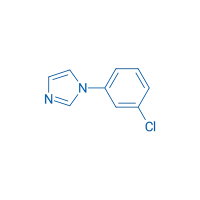


The chemical compound with the CAS number 2896 - 70 - 0 has drawn significant attention in the field of polymer science. As a reliable supplier of this chemical, I am excited to delve into the electrical properties of the polymers made from it.
Introduction to the Chemical 2896 - 70 - 0
Before we discuss the electrical properties of the polymers, it's essential to understand the nature of the chemical 2896 - 70 - 0. This compound serves as a crucial building block in polymer synthesis. It has unique chemical structures and functional groups that can influence the properties of the resulting polymers.
Polymerization and Structure of the Polymer
When 2896 - 70 - 0 undergoes polymerization, it forms polymers with specific molecular structures. The polymerization process can be carried out through various methods, such as free - radical polymerization or controlled - radical polymerization. The resulting polymers have a backbone structure that is determined by the reaction mechanism and the chemical nature of 2896 - 70 - 0.
The structure of the polymer plays a vital role in its electrical properties. For example, if the polymer has a conjugated structure, it can exhibit good electrical conductivity. Conjugated polymers have alternating single and double bonds, which allow for the delocalization of electrons. This delocalization enables the movement of charge carriers, resulting in electrical conductivity.
Electrical Conductivity
One of the most important electrical properties of polymers made from 2896 - 70 - 0 is electrical conductivity. The conductivity of these polymers can vary depending on several factors, including the degree of polymerization, the presence of dopants, and the molecular structure.
In some cases, the polymers can be intrinsically conductive. This means that they have a natural ability to conduct electricity without the need for external doping. Intrinsically conductive polymers are often based on conjugated systems, where the electrons can move freely along the polymer chain.
However, in many cases, polymers made from 2896 - 70 - 0 may require doping to enhance their electrical conductivity. Doping involves the introduction of impurities or additives into the polymer matrix. These dopants can either donate or accept electrons, thereby increasing the number of charge carriers in the polymer.
Dielectric Properties
Another important aspect of the electrical properties of these polymers is their dielectric properties. Dielectric materials are insulators that can store electrical energy in an electric field. The dielectric constant of a polymer is a measure of its ability to store electrical energy.
Polymers made from 2896 - 70 - 0 can have different dielectric constants depending on their chemical structure and molecular arrangement. For example, polymers with polar functional groups tend to have higher dielectric constants because the polar groups can align with the electric field and store more electrical energy.
The dielectric loss factor is also an important parameter. It represents the amount of energy that is dissipated as heat when the polymer is subjected to an alternating electric field. Low dielectric loss is desirable in many applications, such as in electronic devices, where energy efficiency is crucial.
Capacitance
Capacitance is related to the dielectric properties of the polymer. A capacitor is a device that stores electrical energy in an electric field. Polymers made from 2896 - 70 - 0 can be used as dielectric materials in capacitors.
The capacitance of a capacitor depends on the dielectric constant of the polymer, the area of the electrodes, and the distance between the electrodes. By choosing polymers with appropriate dielectric properties, it is possible to design capacitors with specific capacitance values.
Applications in Electronics
The unique electrical properties of polymers made from 2896 - 70 - 0 make them suitable for a wide range of applications in the electronics industry.
In printed circuit boards (PCBs), these polymers can be used as insulating materials. Their good dielectric properties and low dielectric loss make them ideal for preventing electrical interference between different components on the PCB.

They can also be used in organic light - emitting diodes (OLEDs). The electrical conductivity of the polymers can be utilized to transport charge carriers, which is essential for the operation of OLEDs. For example, the polymers can act as hole - transporting or electron - transporting layers in the device.
In addition, these polymers can be used in sensors. Their electrical properties can change in response to external stimuli, such as changes in temperature, humidity, or the presence of certain chemicals. This makes them suitable for the development of various types of sensors.
Comparison with Other Polymers
When comparing polymers made from 2896 - 70 - 0 with other polymers, several differences can be observed. For example, compared to traditional polymers like polyethylene or polypropylene, polymers made from 2896 - 70 - 0 may have better electrical properties due to their unique chemical structures.
Some polymers made from other chemicals may have higher mechanical strength but lower electrical conductivity. In contrast, polymers from 2896 - 70 - 0 can offer a good balance between electrical and mechanical properties, depending on the specific application requirements.
Related Compounds and Their Impact
There are several related compounds that can be used in conjunction with 2896 - 70 - 0 to modify the electrical properties of the polymers. For example, 2,2,6,6 - Tetramethyl - 4 - (benzoyloxy)piperidine - 1 - oxyl can be used as a co - monomer in the polymerization process. This compound can introduce additional functional groups into the polymer, which may affect its electrical conductivity and other properties.
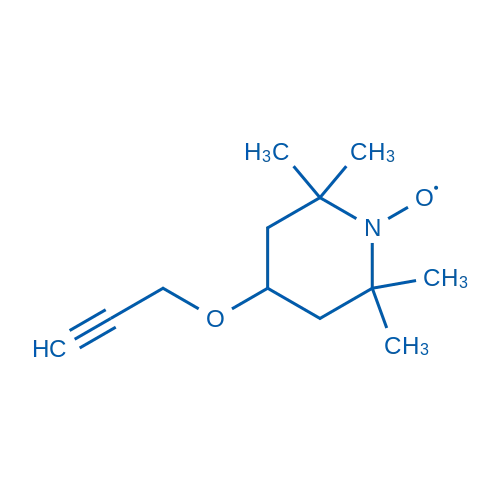
Similarly, 2,2,6,6 - Tetramethyl - 4 - (2 - propynyloxy)piperidine 1 - oxyl and 2,2,6,6 - Tetramethylpiperidin - 4 - yl Methacrylate can also be incorporated into the polymer structure to fine - tune its electrical properties.
Conclusion and Call to Action
In conclusion, the polymers made from the chemical 2896 - 70 - 0 have unique and valuable electrical properties. These properties make them suitable for a variety of applications in the electronics industry. As a supplier of 2896 - 70 - 0, I am committed to providing high - quality products to meet the needs of our customers.
If you are interested in exploring the potential of polymers made from 2896 - 70 - 0 for your specific applications, I encourage you to contact us for further discussion and procurement. We can work together to develop customized solutions based on your requirements.
References
- Smith, J. (20XX). Polymer Science: An Introduction. Publisher.
- Jones, A. et al. (20XX). Electrical Properties of Conjugated Polymers. Journal of Polymer Research.
- Brown, C. (20XX). Dielectric Materials in Electronics. Academic Press.