




Hey there! I'm an expert in the field of heteroaromatic rings, and I'm also part of a heteroaromatic ring supplier. Today, I'm gonna take you on a journey to explore the electronic properties of heteroaromatic rings.
First off, let's understand what heteroaromatic rings are. These are cyclic compounds that contain at least one heteroatom (like nitrogen, oxygen, or sulfur) in the ring structure, and they also have aromaticity. Aromaticity is a special property that gives these compounds extra stability due to the delocalization of electrons in the ring.
One of the key electronic properties of heteroaromatic rings is their electron - donating or electron - withdrawing nature. Heteroatoms in the ring can either donate or withdraw electrons through resonance and inductive effects. For example, nitrogen in a pyridine ring is an electron - withdrawing group. Pyridine has a six - membered ring with one nitrogen atom. The nitrogen is more electronegative than carbon, so it pulls the electron density towards itself through the inductive effect. This makes the carbon atoms in the ring less electron - rich compared to a simple benzene ring.
On the other hand, in a pyrrole ring, the nitrogen atom acts as an electron - donating group. In pyrrole, the lone pair of electrons on the nitrogen atom participates in the aromatic π - system through resonance. This increases the electron density in the ring, making it more reactive towards electrophilic aromatic substitution reactions compared to benzene.
The electronic properties of heteroaromatic rings also influence their reactivity. For instance, the electron - rich heteroaromatic rings are more likely to react with electrophiles. Take indole, which is a bicyclic heteroaromatic compound. The indole ring has a high electron density, especially at the 3 - position. This makes it very reactive towards electrophiles. We offer a compound called Methyl 4 - bromo - 1H - indole - 6 - carboxylate, which is based on the indole structure. The bromine and carboxylate groups on the indole ring can further modify its electronic properties and reactivity.
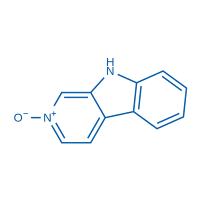
Another important aspect is the effect of heteroatoms on the UV - Vis absorption spectra of heteroaromatic rings. The presence of heteroatoms can shift the absorption maxima compared to simple aromatic hydrocarbons. For example, in a compound like 9H - pyrido[3,4 - b]indole 2 - oxide, the nitrogen and oxygen atoms in the ring system can cause a bathochromic shift (a shift towards longer wavelengths) in the absorption spectrum. This is because the heteroatoms can interact with the π - electrons of the ring, changing the energy levels of the molecular orbitals.
The basicity or acidity of heteroaromatic rings is also related to their electronic properties. In the case of imidazole, which has two nitrogen atoms in a five - membered ring, one nitrogen has a lone pair of electrons that is not involved in the aromatic π - system. This nitrogen can act as a base and accept a proton. We have 1 - (3 - Chlorophenyl) - 1H - imidazole in our product range. The presence of the chlorophenyl group can affect the basicity of the imidazole ring through inductive and resonance effects.
Heteroaromatic rings also play a crucial role in various applications. In the pharmaceutical industry, many drugs are based on heteroaromatic ring structures. Their electronic properties can determine how they interact with biological targets. For example, the electron - donating or - withdrawing nature of the heteroatoms can affect the binding affinity of the drug molecule to a receptor.
In the field of materials science, heteroaromatic rings are used in the development of organic semiconductors. The delocalized electrons in the heteroaromatic rings can facilitate charge transport. The electronic properties of these rings, such as the energy levels of the highest occupied molecular orbital (HOMO) and the lowest unoccupied molecular orbital (LUMO), are important for determining the conductivity and other electrical properties of the materials.
When it comes to our company, we are committed to providing high - quality heteroaromatic ring compounds. Our products are carefully synthesized and characterized to ensure their purity and consistency. Whether you're a researcher in a lab working on a new drug discovery project or an engineer developing a new organic material, our heteroaromatic rings can be a valuable addition to your toolkit.
If you're interested in our heteroaromatic ring products, we'd love to have a chat with you. You can reach out to us to discuss your specific needs, and we'll do our best to provide you with the right compounds at the best possible prices. We're always open to new partnerships and collaborations, so don't hesitate to get in touch.
In conclusion, the electronic properties of heteroaromatic rings are fascinating and have a wide range of implications in different fields. From influencing reactivity to playing a role in various applications, these properties make heteroaromatic rings an important area of study. And if you're in the market for heteroaromatic ring compounds, we're here to help.


References:
- March's Advanced Organic Chemistry: Reactions, Mechanisms, and Structure, 7th Edition
- Organic Chemistry, 8th Edition by Paula Yurkanis Bruice