




Hey there! As a supplier of stable radical building blocks, I'm super excited to share with you the amazing applications of these little chemical wonders. Stable radical building blocks are like the secret sauce in the world of chemistry, opening up a whole new realm of possibilities in various fields. Let's dive right in and explore where these building blocks shine!
1. Polymer Chemistry
Polymer chemistry is one of the most significant areas where stable radical building blocks are making a huge impact. They play a crucial role in controlled radical polymerization (CRP). In CRP, stable radicals act as mediators to control the growth of polymer chains. This results in polymers with well - defined molecular weights, narrow molecular weight distributions, and specific architectures.
For example, nitroxide - mediated polymerization (NMP) uses stable nitroxide radicals. One of the popular stable radical building blocks in this process is 2,2,6,6 - Tetramethyl - 4 - (benzoyloxy)piperidine - 1 - oxyl. It can reversibly deactivate the growing polymer radicals, allowing for a more controlled and uniform polymerization process. This is great for creating high - performance polymers that are used in everything from plastics to coatings.
These well - controlled polymers have better mechanical properties, such as improved strength and flexibility. They can be used in the automotive industry for making lightweight yet strong parts, or in the electronics industry for creating flexible circuit boards.
2. Materials Science
In materials science, stable radical building blocks are used to develop advanced materials with unique properties. For instance, they can be incorporated into organic semiconductors. Organic semiconductors are becoming increasingly important in the development of flexible electronic devices like organic light - emitting diodes (OLEDs) and organic photovoltaics (OPVs).
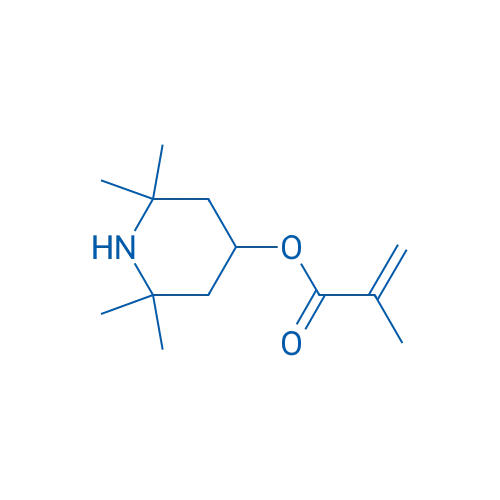
Stable radicals can enhance the charge - transport properties of these materials. By introducing stable radical moieties into the semiconductor structure, we can improve the mobility of charge carriers, which in turn leads to more efficient devices. 2,2,6,6 - Tetramethylpiperidin - 4 - yl Methacrylate can be used as a building block to modify the properties of polymers used in organic semiconductors. This modification can result in better - performing OLEDs with higher brightness and longer lifetimes, or more efficient OPVs that can convert sunlight into electricity more effectively.
3. Biomedical Applications
The biomedical field is another area where stable radical building blocks are showing great promise. They can be used in drug delivery systems. For example, stable radicals can be attached to drug molecules or carriers to improve their targeting and release properties. Some stable radicals have the ability to respond to specific stimuli in the body, such as changes in pH or temperature.
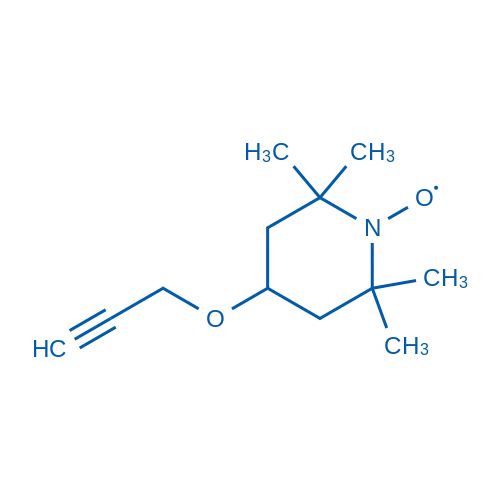
This allows for controlled drug release at the desired site. In addition, stable radicals can be used in magnetic resonance imaging (MRI) contrast agents. They can enhance the contrast in MRI images, providing more detailed information about the internal structures of the body. This helps doctors in diagnosing diseases more accurately. 2,2,6,6 - Tetramethyl - 4 - (2 - propynyloxy)piperidine 1 - oxyl could potentially be used in the development of these advanced biomedical materials.
4. Energy Storage
In the field of energy storage, stable radical building blocks are being explored for use in batteries. Radical - based batteries are a new and exciting area of research. These batteries use stable radicals as redox - active materials. They have the potential to offer high energy density, fast charging times, and long cycle lives.
Stable radicals can store and release energy through reversible redox reactions. When compared to traditional battery materials, radical - based batteries may be more environmentally friendly and cost - effective. For example, some stable radical polymers can be used as electrode materials in lithium - ion batteries. This could lead to the development of more efficient and sustainable energy storage solutions for electric vehicles and renewable energy systems.
5. Catalysis
Stable radical building blocks are also used in catalysis. They can act as catalysts or co - catalysts in various chemical reactions. For example, they can participate in radical - mediated reactions, such as radical addition and substitution reactions. In some cases, stable radicals can activate inert molecules, making them more reactive and allowing for the synthesis of complex organic compounds.
This is useful in the pharmaceutical industry for the synthesis of new drugs. By using stable radical - based catalysts, chemists can develop more efficient and selective synthetic routes, reducing the number of steps and waste in the drug - making process.
Why Choose Our Stable Radical Building Blocks?
As a supplier, we offer high - quality stable radical building blocks. Our products are carefully synthesized and purified to ensure the highest level of purity and performance. We have a wide range of building blocks available, including the ones I've mentioned above, and we're constantly working on developing new and improved products.
Whether you're a researcher in a laboratory, a manufacturer in the polymer industry, or a scientist in the biomedical field, our stable radical building blocks can meet your needs. We understand the importance of these building blocks in various applications, and we're committed to providing you with the best products and service.
If you're interested in learning more about our stable radical building blocks or have any questions about their applications, don't hesitate to reach out. We're here to help you find the right solutions for your projects. Whether you need a small quantity for research purposes or a large - scale supply for industrial production, we can accommodate your requirements.
So, if you're looking to take your research or production to the next level with stable radical building blocks, get in touch with us. We're excited to work with you and be a part of your success!
References
- Matyjaszewski, K., & Davis, T. P. (Eds.). (2002). Handbook of radical polymerization. Wiley.
- Hawker, C. J., Bosman, A. W., & Harth, E. (2001). New polymer synthesis by nitroxide - mediated living radical polymerizations. Chemical Reviews, 101(12), 3661 - 3688.
- Wudl, F., & Heeger, A. J. (1998). Organic semiconductors. Annual Review of Materials Science, 28(1), 361 - 400.